A New Benchmark in Green Construction and Efficient Storage: Steel Structure Warehouses
Against the backdrop of the "14th Five-Year Plan"—which is driving the in-depth development of modern logistics systems—the construction of industrial parks and logistics hubs across the country is experiencing a new surge of activity. Among the myriad of building forms available, steel structure warehouses—thanks to their unique performance advantages—are gradually displacing traditional reinforced concrete structures to become the preferred solution for large-scale warehousing, cold chain logistics, and industrial facilities.
The Physical Foundation for "Vertical Industrialization": Large Spans and High Space Utilization
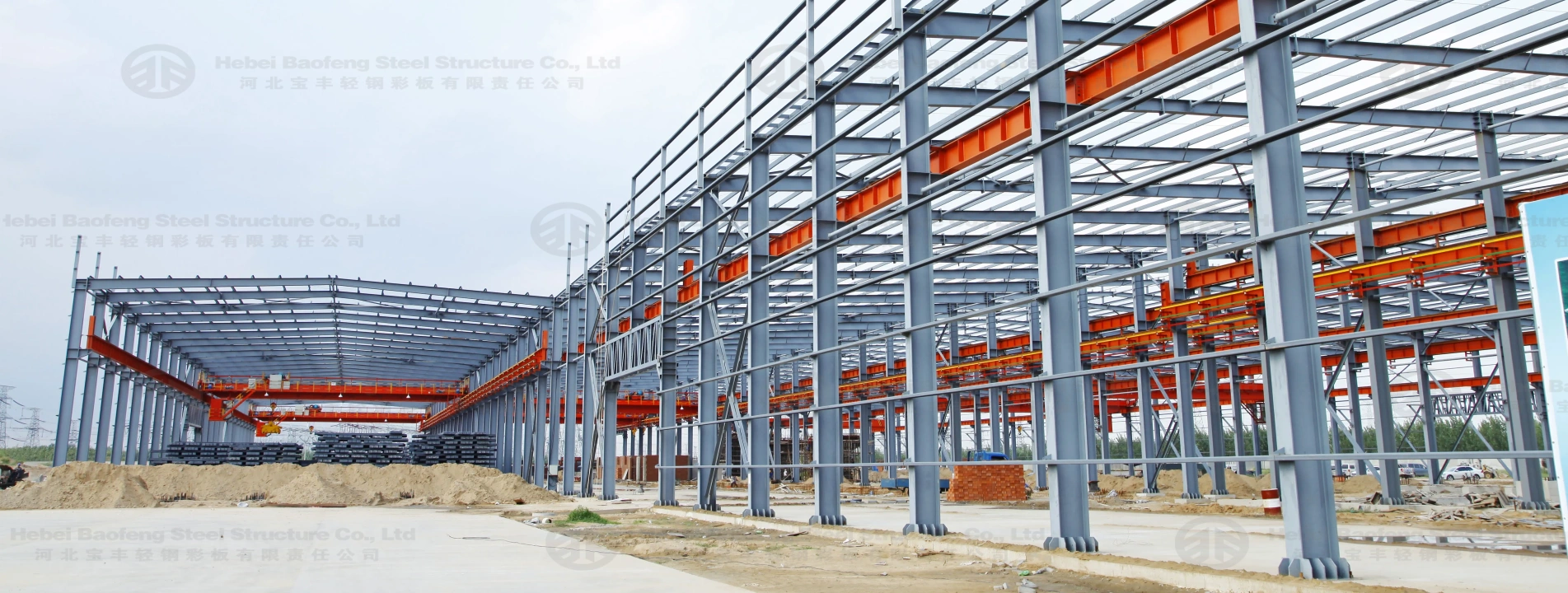
Compared to traditional buildings, the most immediate advantage of steel structure warehouses lies in their exceptional mechanical properties. Benefiting from the inherent high strength and lightweight nature of steel, these structures can easily achieve column-free, large-span designs exceeding 30 meters.
"For warehouse operators, fewer columns mean a larger usable floor area within the facility, as well as smoother operational paths for forklifts and automated equipment," a senior engineer specializing in logistics real estate told reporters. "The effective usable area of a steel structure warehouse is typically 5% to 8% greater than that of a concrete frame structure. Furthermore, the internal spatial layout is extremely flexible, allowing for partition adjustments at any time to meet client needs—perfectly aligning with the current trend toward 'rack-integrated' automated vertical warehouses."
An "Accelerator" for Construction Schedules: Modular Construction Shortens Timelines
In the logistics industry—where "time is money"—the ability to deliver a project rapidly directly impacts the return on investment. Steel structural components are standardized and prefabricated in a factory setting; upon arrival at the construction site, they require only high-strength bolt connections, thereby eliminating the lengthy curing periods associated with concrete.
"For warehouses of equivalent scale, a steel structure reduces the construction timeline by approximately 30% to 50% compared to a traditional reinforced concrete structure," a project manager explained. "This means enterprises can bring their facilities online six months sooner, allowing them to seize market opportunities ahead of the competition. For emergency reserve depots or highly seasonal cold chain logistics operations, this advantage in timeliness holds immense commercial value."
A "Top Performer" in Green and Low-Carbon Initiatives: Recyclability and Low Energy Consumption
Driven by the nation's "Dual Carbon" goals (carbon peaking and carbon neutrality), the green transformation of the construction industry has become a critical imperative. Steel structures are widely hailed as a quintessential example of "green architecture."
First and foremost, steel possesses exceptionally high recycling value. When a warehouse faces functional changes or demolition, the disassembly and recycling rate for steel-structure buildings can exceed 90%. This prevents the generation of substantial construction waste and facilitates resource recycling throughout the entire lifecycle of the facility.
Furthermore, by incorporating innovative composite sandwich panels for the building envelope, steel-structure warehouses achieve exceptional airtightness and thermal insulation performance. When integrated with Building-Integrated Photovoltaics (BIPV) design, solar panels can be installed across large areas of the roof, enabling a "self-generation, self-consumption, and grid-connection" model that significantly reduces energy consumption costs during warehouse operations.
Seismic Resilience and Safety Reliability
my country is a vast country with complex geological conditions in certain regions. Steel structural materials possess excellent ductility and toughness, enabling them to effectively absorb and dissipate seismic energy. Compared to traditional structures, steel-structure warehouses face a significantly lower risk of collapse during severe earthquakes, thereby maximizing the safety and security of stored goods. Additionally, steel itself is a non-combustible material; when combined with advanced fire-retardant coatings and fire suppression systems, it provides a robust safety barrier for high-value cargo.
Expert Perspective: Aligning with Modern Logistics Trends
Experts from the China Federation of Logistics and Purchasing point out that, amidst increasingly scarce land resources and rising labor costs, the warehousing industry is undergoing a transformation toward high-rise, intelligent, and low-carbon facilities. With their combined advantages—including lightweight construction, lower foundation costs, rapid construction speeds, and eco-friendliness—steel-structure buildings align perfectly with this evolving trend. In the future, the adoption rate of steel-structure technology is expected to continue rising, particularly in the construction of "high-standard warehouses" (premium logistics facilities) and intelligent cold-chain parks.
Transitioning from "manufacturing" to "intelligent manufacturing," and from "high energy consumption" to "green and low-carbon" operations, steel-structure warehouses are fundamentally reshaping the infrastructure landscape of modern industry and logistics. They represent not merely an evolution in architectural form, but a vital engine driving cost reduction, efficiency gains, and sustainable development within the logistics sector. As technological innovation continues to advance, steel structures are poised to play an increasingly pivotal role in the development of smart logistics parks.