Steel Structure Warehouses Reshape the Modern Storage Industry Ecosystem
In the modern supply chain system and industrial development landscape, the storage link is undergoing a profound paradigm shift. Traditional warehouses, once considered static "containers for goods," are now being rapidly replaced by a new generation of intelligent storage facilities with steel structures as their core carrier. This is not only a change in building materials but also represents a shift in storage philosophy from a cost center to a value engine. Steel structure warehouses, with their high adaptability and flexibility, are becoming a key infrastructure supporting the efficient and resilient operation of the real economy.
Traditional Storage Pain Points and Structural Breakthroughs
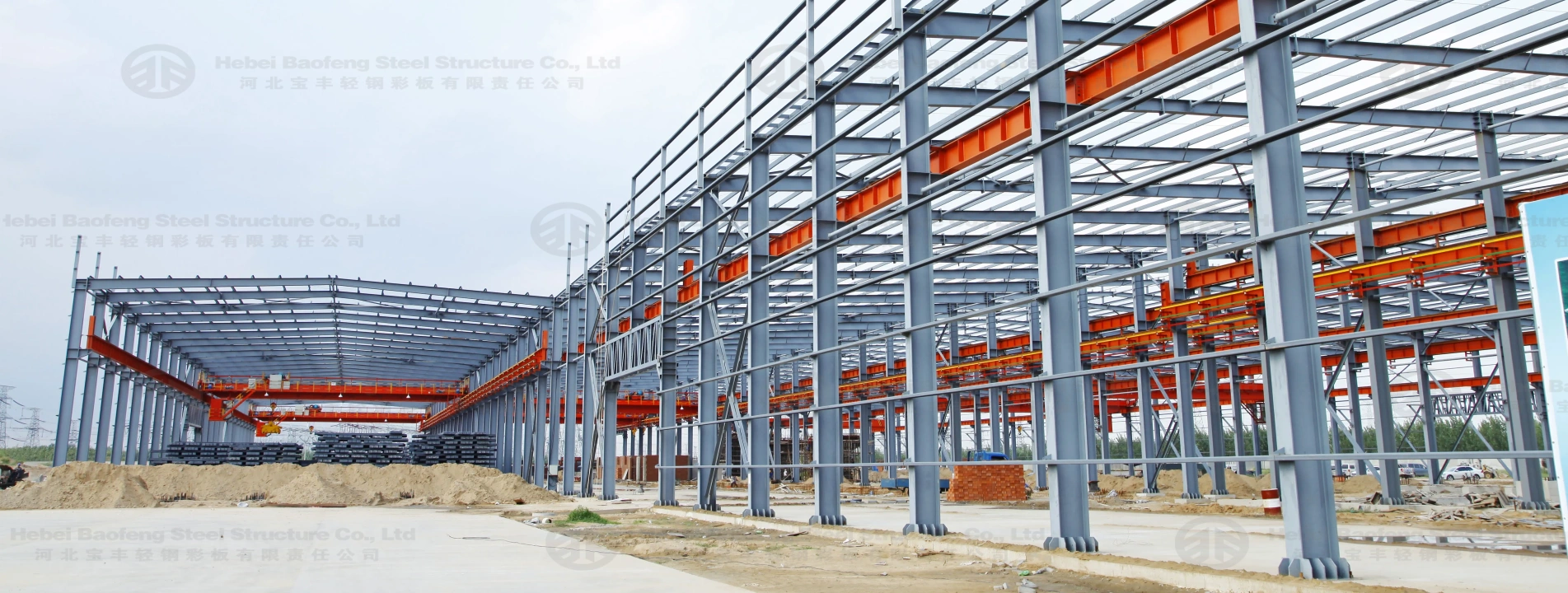
Traditional warehousing facilities, especially older warehouses, generally face core pain points such as low space utilization, difficulty in renovation, weak environmental control capabilities, and difficulty in matching automated equipment. With increasingly scarce land resources and rising labor costs, enterprises urgently need to maximize storage capacity and operational efficiency within limited space. Steel structure warehouses, with their inherent advantage of large-span column-free space, provide an ideal solution. Their internal space is complete and open, not only maximizing planar storage density but also enabling the unobstructed operation of modern logistics equipment such as automated storage and retrieval systems (AS/RS) and high-speed sorting systems, resulting in a revolutionary improvement in storage efficiency and operational efficiency per unit area.
Deep Adaptation to Multiple Scenarios, Meeting Specialized Storage Needs
The practicality of steel structure warehouses is fully demonstrated in addressing diverse and specialized storage needs:
Industrial Raw Materials and Finished Product Storage: For manufacturing enterprises, heavy-duty steel structures can bear large equipment and dense stacking, and their stability ensures the safety of high-value goods. At the same time, the rapid construction characteristics help enterprises keep pace with production rhythms and flexibly deploy raw material warehouses and finished product warehouses.
Cold Chain and Temperature-Controlled Warehousing: By using high-performance insulation panels and sealing technology, steel structures can quickly build large-space, high-standard cold storage environments. Their structure is easy to integrate with precise temperature and humidity control systems, meeting the stringent storage environment requirements of fresh food, pharmaceuticals, and other products.
Bulk Commodities and Agricultural Warehousing: For bulk materials such as grain and cotton, steel structure warehouses can be designed with dedicated ventilation systems to effectively prevent dampness and mildew. Their fast construction speed also meets the needs of agricultural products, which are highly seasonal and require rapid centralized warehousing. E-commerce and Regional Logistics Centers: E-commerce businesses experience significant peaks and valleys in demand. The modular nature of steel-frame warehouses supports rapid expansion or flexible partitioning to cope with the pressure of peak seasons like "Double Eleven" (Singles' Day). Their spacious interiors are ideal for efficient "goods-to-person" picking operations.
Intelligent Empowerment, Defining a New Meaning of Storage
Today's steel-frame warehouses have evolved into a deeply integrated physical-digital fusion. Their regular structure provides excellent conditions for the deployment of various IoT sensors, monitoring equipment, and machine vision systems. From energy management and security monitoring of the warehouse building itself to real-time positioning of goods, inventory visualization, and robot scheduling within the warehouse, data flows seamlessly on the steel structure framework. This transforms storage management from a rough, experience-based model to a data-driven, refined, and intelligent operation, significantly reducing cargo damage rates and improving order response speed and inventory turnover rate.
Future Outlook: Green, Resilient, and Continuously Evolving
Looking ahead, the application of steel-frame warehouses in the storage field will focus more on sustainable development throughout their entire lifecycle. More warehouses will adopt integrated solar photovoltaic roofs, achieving "self-generation and self-consumption, with surplus electricity fed into the grid," becoming green energy nodes. At the same time, their excellent seismic and wind resistance enhances the disaster resilience of critical material storage systems. With the application of new materials, new processes, and digital twin technology, future steel-frame storage facilities will be smarter, more energy-efficient, and more adaptive, continuously providing solid and flexible physical space support for ensuring the safety and stability of supply chains and promoting the high-quality development of the real economy.